Best Keyboard Piano for Kids to Learn (2026): 5 Picks by Age
The best keyboard piano for kids to learn on has 61 full-size, touch-sensitive keys, built-in lessons and a headphone jack, so practice is quiet and the skills carry over to a real piano. Lighted keys help kids aged about 5 to 10 follow songs, and 88 weighted keys make sense once lessons get serious.
Last updated: October 27, 2026. By Chris, editor of Toy Hobbyist, who researches music and learning toys for the site. We compared the most popular beginner keyboards and digital pianos on Amazon on key count, key size, touch response, lighted keys, built-in lessons, power options, what is in the box, buyer ratings and price, using each brand’s listed specs. Prices, ratings and stock were checked on Amazon (US) on October 27, 2026.
Quick answer: For most kids learning piano, the Casio Casiotone LK-S250 is the best keyboard piano. It has 61 full-size, touch-responsive keys that light up to show the next note, a 4-stage lesson system, 60 built-in songs and 400 tones, plus a 4.6 out of 5 rating from 555 Amazon buyers at $239.99. For a lower price without lights, get the Yamaha PSR-E383 ($199.99).
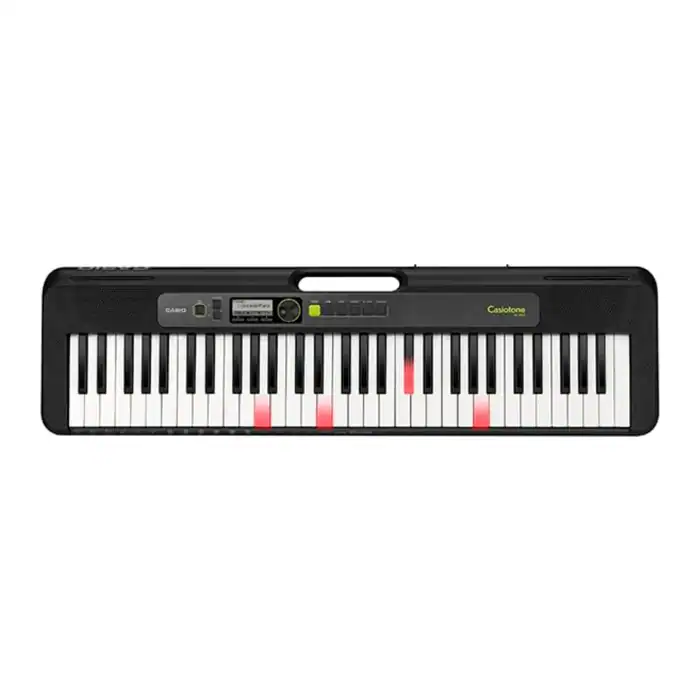
Casio Casiotone LK-S250 Lighted Keyboard
61 full-size, touch-responsive keys that light up to show the next note, a 4-stage lesson system, 60 built-in songs and 400 tones. Runs on six AA batteries or the included power supply, with a music rest.
| Best For | Kids 5 to 10 learning songs at home |
| Price | $239.99 (Oct 27, 2026) |
| Discount | Power supply and music rest included |
| Promotion | 1 year Casio parts and labor warranty |
What is the best keyboard piano for kids in 2026?
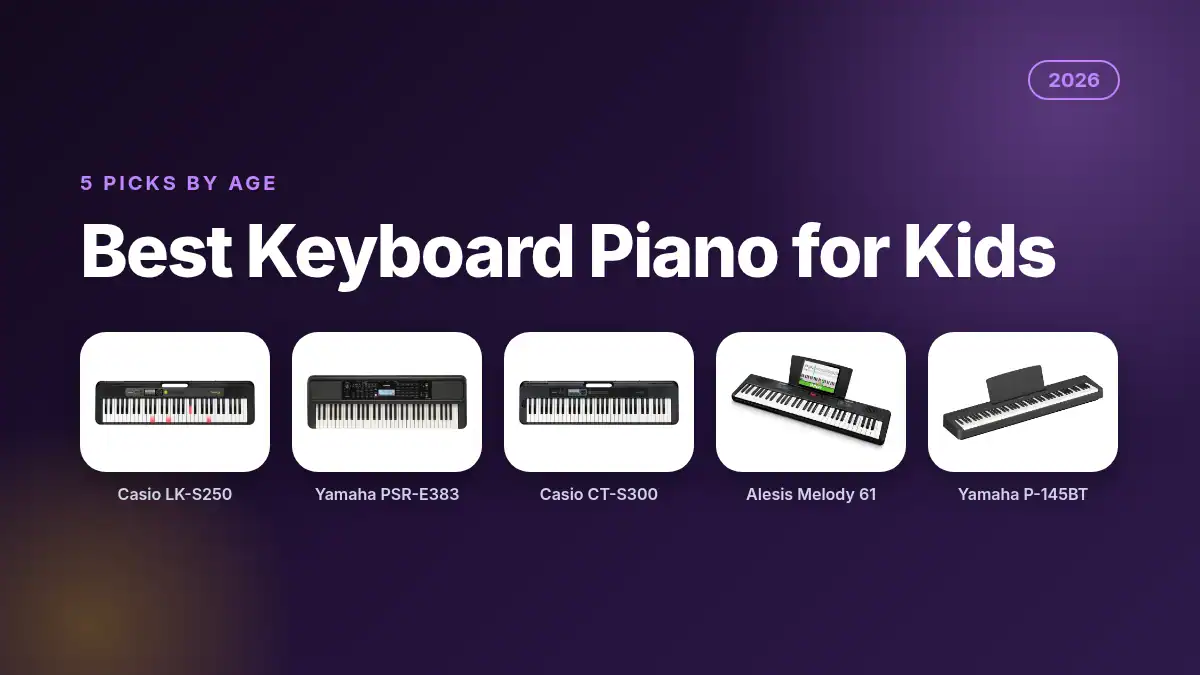
The best keyboard piano for kids in 2026 is the Casio LK-S250 ($239.99) with lighted keys and lessons. The Yamaha PSR-E383 ($199.99) has the most lesson songs, the Casio CT-S300 ($199.99) is the best rated, the Alesis Melody 61 MK4 ($75.99) is the budget pick, and the Yamaha P-145BT ($529.99) suits serious students.
| Keyboard piano | Best for | Price (Oct 27, 2026) | Keys | Lessons | Amazon rating | Our score |
|---|---|---|---|---|---|---|
| Casio Casiotone LK-S250 | Best overall, lighted keys | $239.99 | 61 full size, touch response, lighted | 4-stage lessons, 60 songs | 4.6 (555 ratings) | 4.7 / 5 |
| Yamaha PSR-E383 | Most built-in lesson songs | $199.99 | 61 full size, touch sensitive | Keys to Success, 125 lesson songs | 4.6 (518 ratings) | 4.6 / 5 |
| Casio Casiotone CT-S300 | Best rated, lightest to carry | $199.99 | 61 full size, touch response | App lessons (Casio Music Space) | 4.7 (1,463 ratings) | 4.5 / 5 |
| Alesis Melody 61 MK4 | Best budget, ages 4 to 7 | $75.99 | 61 compact, not touch sensitive | Skoove and Melodics lessons access | 4.2 (1,168 ratings) | 4.1 / 5 |
| Yamaha P-145BT | Best for serious students | $529.99 | 88 weighted, GHC hammer action | Smart Pianist app | 4.6 (153 ratings) | 4.6 / 5 |
What kind of keyboard should a child learn piano on?
A child should learn on a keyboard with at least 61 full-size, touch-sensitive keys, because full-size keys train the same hand span as a real piano and touch response teaches soft and loud playing. Built-in lessons and a headphone jack help, and kids who take weekly lessons will eventually need 88 weighted keys.
Kids keyboard fit test: we sorted every keyboard here by the four features piano teachers and keyboard makers most often name for beginners: key size, touch response, key count and key weight. The ages below are a general guide, not a rule, so go by your child’s interest and whether they take lessons. All specs come from each brand’s Amazon listing.
| Age and goal | Key size | Touch response | Key count | Weighted keys | Our pick |
|---|---|---|---|---|---|
| 4 to 7, trying it out | Compact is fine | Nice to have | 61 | No | Alesis Melody 61 MK4 |
| 5 to 10, learning songs at home | Full size | Yes | 61 | No | Casio LK-S250 (lighted keys) |
| 6 to 12, learning with a book or app | Full size | Yes | 61 | No | Yamaha PSR-E383 or Casio CT-S300 |
| 8 and up, weekly piano lessons | Full size | Yes | 88 | Yes, hammer action | Yamaha P-145BT |
How to use the table: if your child just wants to play songs for fun, a 61-key keyboard is plenty. If a piano teacher is involved, ask what they want at home, because many teachers prefer 88 weighted keys once a student moves past the first method books. A 61-key keyboard still works for the first year and costs far less.
How did we choose these kids keyboards?
We started with the best-selling and best-rated 61-key and 88-key beginner keyboards on Amazon, then removed toy keyboards with mini keys under 61 notes, listings with few ratings and anything out of stock today. The rest were compared on keys, touch response, lessons, power, box contents, brand and price.
Our scores are editorial ratings out of 5. They weigh how well each keyboard helps a child actually learn piano first, then key feel and size, then lessons and features, then buyer feedback and value. Every spec comes from the brand’s Amazon listing, and prices and stock were checked on Amazon (US) on October 27, 2026.
Which keyboard piano for kids should you buy?
Buy the Casio LK-S250 for most kids who want to learn songs at home, and the Yamaha PSR-E383 if you would rather skip the lights and get more lesson songs for less. Pick the Casio CT-S300 for a light, well-rated keyboard, the Alesis Melody 61 MK4 on a tight budget, and the Yamaha P-145BT for weekly lessons.
1. Casio Casiotone LK-S250 (Best Overall)
The LK-S250 is the keyboard we would hand most kids who want to learn. Its 61 full-size keys are touch responsive, and Casio’s key lighting system lights up the keys to play, so a child can follow a built-in song without reading music yet. The voice-guided 4-stage lesson system walks them through each song step by step.
It has 400 tones, 77 rhythms, 60 built-in songs and a Dance Music Mode for kids who would rather make beats. It runs on six AA batteries or the included power supply and comes with a music rest. A headphone jack, audio input and USB-MIDI port let it work with apps like Casio’s Chordana Play. Casio covers it with a 1 year parts and labor warranty.
The trade-offs are small. Headphones and a stand are not in the box, and a few buyers say the headphone jack or micro USB port wore out within months, so handle cables gently. Some buyers also note that only Casio’s app and a few third-party apps can drive the lights.
Pros:
- Lighted keys show kids which note to play next
- 61 full-size, touch-responsive keys
- 4-stage lesson system with 60 built-in songs
- Runs on batteries or the included power supply
Cons:
- No headphones or stand included
- A few reports of the headphone jack failing
2. Yamaha PSR-E383 (Most Built-In Lesson Songs)
The PSR-E383 is Yamaha’s current beginner keyboard and an Amazon’s Choice pick. It has 61 full-size, touch-sensitive keys and Yamaha’s Keys to Success lessons, which break 125 lesson songs into short phrases so a child can practice one hand at a time.
Touch Tutor teaches kids to control how loud they play, Smart Chord plays full chords with one finger, and Duo Mode splits the keyboard into two halves so a parent or teacher can play side by side. It has 650 voices, USB audio and MIDI, and runs on the included adapter or six AA batteries.
There are no lighted keys, so younger kids may need a little more help from a parent at first. Battery life is listed at about five hours, so plan on using the adapter at home. A few buyers reported a key or unit that did not work out of the box, so test every key when it arrives.
Pros:
- 125 lesson songs with one hand at a time practice
- Touch Tutor builds real piano dynamics
- Duo Mode for practicing with a parent or teacher
- $40 less than the LK-S250
Cons:
- No lighted keys
- About five hours of battery life
3. Casio Casiotone CT-S300 (Best Rated)
The CT-S300 has the highest Amazon rating here at 4.7 out of 5 from 1,463 buyers. It is the LK-S250’s sibling without the lights: 61 full-size, touch-responsive keys, 400 tones, 77 rhythms, 60 built-in songs and Dance Music Mode, plus a pitch bend wheel the LK-S250 does not have.
It is easy for a child to carry at about 7 lbs, and Casio lists up to 19 hours of play on six AA batteries, the longest battery life in this guide. Lessons come through the free Casio Music Space app on iOS or Android, and the box includes the power supply and a music rest.
Today it costs the same as the PSR-E383, so it is less of a bargain than usual against a $259.99 list price. Amazon also flags it as a frequently returned item, and some buyers find the small speakers thin, so plan on headphones for the best sound.
Pros:
- Highest rating in this guide, 4.7 from 1,463 buyers
- Up to 19 hours on six AA batteries
- Light and easy for kids to carry
- Pitch bend wheel for extra expression
Cons:
- No built-in lesson system or lighted keys
- Speakers sound thin to some buyers
4. Alesis Melody 61 MK4 (Best Budget)
The Melody 61 MK4 is the lowest-cost way to find out whether a young child will stick with piano. At $75.99, sold by Amazon, it includes 300 sounds, 300 accompaniment rhythms, 30 demo songs, a metronome, a record mode and access to Skoove and Melodics online lessons.
It weighs 6.6 lbs, runs on the included adapter or six AA batteries (not included), and has a headphone output and USB-MIDI. Alesis also sells light-up key versions and bundles with a stand and headphones on the same listing.
The catch is the keys. Alesis lists them as 61 compact keys without touch sensitivity, so they are a little smaller than a real piano and play at one volume however hard you press. That is fine for a 4 to 7 year old trying music for the first time, but upgrade once your child starts lessons.
Pros:
- Lowest price in this guide at $75.99
- Online lessons from Skoove and Melodics included
- Record mode and metronome for practice
- Light at 6.6 lbs
Cons:
- Compact keys, smaller than full size
- Not touch sensitive
5. Yamaha P-145BT (Best for Serious Students)
The P-145BT is the pick for a child taking weekly piano lessons. It has 88 weighted, touch-sensitive keys with Yamaha’s Graded Hammer Compact action, which is heavier in the bass and lighter in the treble like an acoustic piano, and it is the number 1 best seller in Home Digital Pianos on Amazon today.
It includes a sustain foot switch, a music rest and an AC adapter. Bluetooth audio lets kids play along with songs from a phone, Duo Mode splits the keys so a teacher can play next to them, and Yamaha’s Smart Pianist app adds extra controls on a phone or tablet. USB to Host sends MIDI and audio to a computer.
It is the most expensive keyboard here, and it is a full-size instrument at 24.5 lbs and about 52 inches wide, so it needs a stand or a sturdy table. There are no battery options, built-in lesson songs or extra tones like the 61-key keyboards have, because it is built to feel like a piano.
Pros:
- 88 weighted keys with hammer action, like a real piano
- Sustain foot switch included
- Bluetooth audio for playing along with songs
- Will last from beginner to intermediate lessons
Cons:
- Highest price, and no stand included
- Wall power only, no batteries
Are lighted keys good for learning piano?
Lighted keys are good for getting young kids playing songs quickly, because the keyboard shows which note comes next and keeps practice fun. They do not teach reading music on their own, so pair them with a lesson book or app and turn the lights off as your child improves.
| Keyboard | Lighted keys | Built-in lessons | Songs | Tones | Battery power | In the box |
|---|---|---|---|---|---|---|
| Casio LK-S250 | Yes | 4-stage lessons | 60 | 400 | 6 AA | Power supply, music rest |
| Yamaha PSR-E383 | No | Keys to Success, Touch Tutor | 125 lesson songs | 650 | 6 AA, about 5 hours | Power adapter, music rest |
| Casio CT-S300 | No | App lessons | 60 | 400 | 6 AA, up to 19 hours | Power supply, music rest |
| Alesis Melody 61 MK4 | No (light-up version sold) | Skoove and Melodics access | 30 demo songs | 300 | 6 AA, not included | Power adapter, music rest |
| Yamaha P-145BT | No | Smart Pianist app | Not listed | Not listed | No | Adapter, music rest, sustain foot switch |
Is a 61-key keyboard enough for a child to learn piano?
Yes, a 61-key keyboard is enough for a child’s first year or two of piano, since most beginner songs stay in the middle of the keyboard. Choose full-size, touch-sensitive keys so the skills carry over, and move to an 88-key weighted piano when lessons reach pieces that need the full range.
If your child would rather rock out, our guide to the best kids electric guitar with amp covers starter kits by age, and the best kids drum set with headphones has quiet electronic kits. For more holiday ideas, see our best gifts for kids roundup.
What accessories does a kids keyboard need?
Most kids keyboards need headphones, a stand or table at the right height and an adjustable bench, and none of the 61-key models here include those in the base listing. A sustain pedal is worth adding once lessons start, and the Yamaha P-145BT already includes a sustain foot switch.
Set the keyboard so your child’s forearms are level with the keys and their feet can rest flat or on a footstool. For Christmas, order the stand and headphones together with the keyboard so it is ready to play the moment it is unwrapped.
FAQ
What is the best keyboard piano for a child to learn on?
The Casio Casiotone LK-S250 is the best keyboard piano for most kids to learn on. It has 61 full-size, touch-responsive keys that light up, a 4-stage lesson system and 60 built-in songs for $239.99, with a 4.6 out of 5 rating from 555 Amazon buyers.
What is the best keyboard for a 5 year old?
For a 5 year old, a 61-key keyboard with lighted keys like the Casio LK-S250 keeps learning fun, while the Alesis Melody 61 MK4 ($75.99) is a low-cost way to test interest. Its compact keys are a little smaller than full size, which suits small hands.
Should my child learn on 61 or 88 keys?
Most children can start on 61 full-size, touch-sensitive keys, which cover nearly all beginner songs. Move to 88 weighted keys, like the Yamaha P-145BT, when your child takes regular lessons or their teacher asks for a full piano range and weighted feel.
Are touch-sensitive keys important for kids?
Yes. Touch-sensitive keys play louder when pressed harder, like a real piano, so kids learn dynamics from the start. The Casio LK-S250, Casio CT-S300 and Yamaha PSR-E383 all have touch response, while the budget Alesis Melody 61 MK4 does not.
Can kids practice keyboard quietly with headphones?
Yes. Every keyboard in this guide has a headphone jack, and plugging in headphones mutes the speakers so kids can practice without disturbing anyone. Headphones are not included with any of the base models here, so add a pair to your order.